
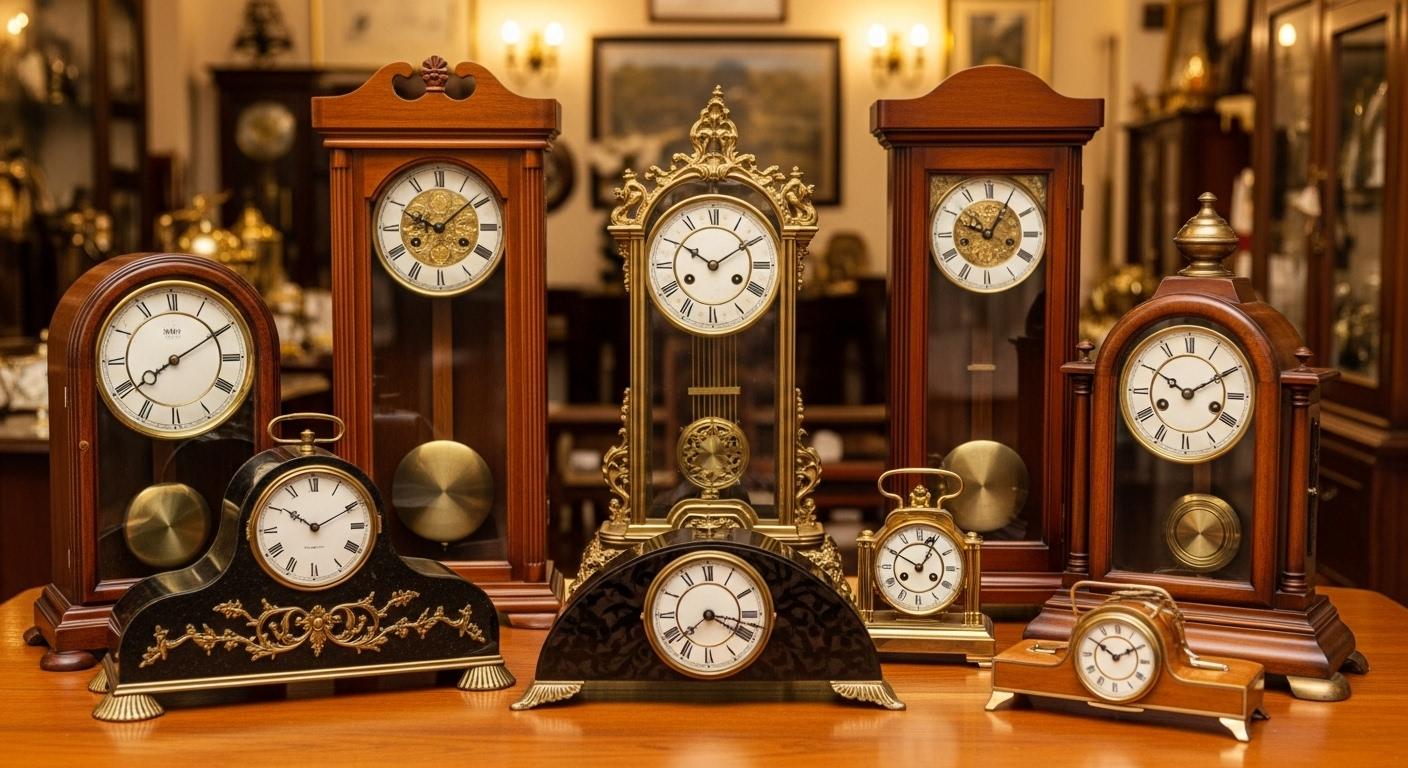
A century-old pendulum pulses, its golden hands shimmering amid the hush of a living room, and suddenly the past seems closer. These clocks don’t just tell the hour. They strike up conversations, spark curiosity, tempt the hand until you almost trace the polished wood and press for their secrets. You want to know—why do these objects matter so much, why do their stories stick to the air? The answer is simple. Yes, antique clocks for sale serve as both stunning decor and history’s messengers. Anyone, from the shrewd collector to those who trust instinct alone, finds themselves drawn to these silent witnesses. The appeal is real, you sense it with every tick. Let’s clear up the question now—antique clocks for sale aren’t just relics; they’re living proof that the right purchase brings the past stirring into your everyday.
The shifting market of antique clocks for sale: what’s really happening in 2025
It’s no longer about that lone clock gathering dust in a forgotten attic. Patterns shift. Auction rooms buzz in Paris, feverish bids on Catawiki or Artcurial change old rules, and suddenly platforms such as 1stdibs flood with choices overnight. The whole dynamic runs hot, fueled by both tradition and a digital craving. You might pause, wondering—how did these clocks climb back into the spotlight? Why does their pulse beat faster now?
Also to see : How Can You Transform a Small Space with Elegance in UK Home Deco?
People crave connection to a slower era, chase authenticity, and suspect that beauty counts for something. There’s money on the table too, but not just money—the idea of holding a single, irreplaceable piece has gained its own form of currency. Antique clock buyers look both for beauty and the hope of investment, or perhaps just for that thrill as the seconds pass in a way modern clocks never provide. The press picks apart every record-breaking sale, and syndicates note a steady climb in old clock trading. Thousands enter the chase, SWIFT codes mix with mahogany. It’s not nostalgia anymore; it’s future-proofing a home or a collection with physical proof of craft.
Why not draw inspiration from those driven by vintage trends? If you gravitate toward the witty syntax of Art Deco, those shiny chrome lines, you aren’t alone—sales in France and Germany lean that way, while across the Channel, that bracket clock in mahogany calls out to British connoisseurs. Furthermore, incredible collection of antique mantel clocks often shines a light on rare finds and restored pieces, offering new meaning to collecting. Collectors want movement and story; nobody settles for broken pieces. Victorian clocks sometimes surprise everyone with surging popularity. Some discover the magic in a skeleton clock, transparent as honesty, letting you see exactly what keeps everything in motion.
In parallel : How Can British Home Decorations Elevate Your Living Space?
| Style | Country of origin | Average price (2025) | Trend |
|---|---|---|---|
| English bracket clock | United Kingdom | €2,000-8,000 | Favoured for top repairs |
| 19th-century Comtoise | France | €800-2,500 | Holding strong locally |
| Art Deco clock | France/Germany | €400-2,800 | Boosted by vintage design |
| French carriage clock | France | €1,500-6,000 | Pan-European buyers |
The types and unique features of rare historical clocks
Step through any market and the categories multiply—grand longcase clocks, delicate small clocks that have traveled continents. Are you drawn to the bold vertical presence of a wall clock, or more easily charmed by mantel clocks for sale lined up on a shelf? That bracket clock, stern yet elegant, or the ever-mobile carriage clock, always a conversation starter. Floors become stages for grandfather clocks, stories linger around each one—a dramatic piece in an ordinary evening.
Your fingertip touches old oak that feels nearly primitive, then glides over mahogany smoothed by time, finishes with walnut gleaming unexpectedly in the light. Some clocks burst with gilded detail, others weave inlay and enamel into the grain. All this skill—lost, really, except in memories and in your hands. The soul of a vintage clock blurs that boundary between mechanism and shell. Collectors pay close attention—anchor escapements, any added complication, even a single mark from the maker counts for something. Collectible clocks transform from accessories to statements, even philosophies. Every glimpse at a clever mechanism sends the mind spinning into another timeframe.
The smart moves for successful purchases of antique clocks for sale
What do you do, standing face-to-face with an old clock and a tangle of hope and suspicion? One glance never unravels the truth. Pause, sift through papers if they’re offered—a receipt, a tiny hallmark hiding underneath, or if you’re lucky, a faded certificate. Piece together a timeline if you can. Verify. Does the movement echo the original era or some restorer’s modern hands?
Comparisons don’t sleep anymore. Online forums, price trackers, word-of-mouth tips—these all push doubt into the spotlight. Some trust the handshake of a shopkeeper, others carefully read testimonials. Locations matter nearly as much as mechanisms. A long-standing boutique like Big Ben’s in Paris courts old-world charm, Drouot and Sotheby’s strip auctions of any pretense, while eBay and 1stdibs toss open the floodgates to new players and tight budgets alike. Flea markets sometimes toss up real surprises—a once-in-a-lifetime piece at the bottom of a crate, ignored by most, but shining for those who take the second look.
- Face-to-face with a shopkeeper or trusted dealer, you listen to expertise instead of guesswork
- Online, photos never completely tell the story—look for detail, consistency, and reviews that show more than a brand label
- Auction drama rewards patience, but you risk losing control—excitement sometimes pushes prices beyond reason
Want a shortcut? Compare. Read. Ask questions even if you feel like a beginner. Every choice adds a layer to your own history with old clocks. Your taste, your caution, your whim, rewarded or not, becomes data for the next collector.
The wide price ranges and value triggers for old clocks
No purchase stings like the one that costs far too much for too little. The price of an old clock sways with age, brand, how rare it is, who owned it, how it’s been maintained, and how much its restoration breaks or preserves the rules. Look at a signed Empire portico clock and see thousands evaporate in a transaction, easy as anything if the paperwork checks out. Yet a no-name clock, patched up and dutiful, sells for a fraction of what a star might fetch.
Condition makes or breaks a deal. Every component counts, from a smooth-running mechanism down to the completeness of its decorative details. A reputable source or a clear history bumps a price; sentimental backstory sometimes seals it for the buyer, regardless. Listen to stories—one collector, Sylvie, still laughs about that night online, her hands shaking as she snagged her first Breguet mantle clock without seeing it in person. She grins, “Suddenly my living room felt different, the air full of another heartbeat. I never viewed time—or my furniture—the same way after.” It happens. That thrill marks the real difference when a piece changes hands.
The maintenance, repairs, and preservation quirks of antique clocks
Careful handling makes the difference between a treasure and a headache. Wipe down cases gently with a dry cloth, never rough enough to scratch, and keep gilded parts far from sweat or aggressive products. Avoid windowsills, radiators, damp—sun and moisture only bring out the worst quickly, not the charm. Bring in an expert to lubricate the movement every two or three years, or risk the softest tick turning into stubborn silence. DIY pictures on the internet tempt many, but old clocks rarely reward casual repairs—one wrong twist and months of expert work unravel.
Clocks sometimes stall. Sometimes you want to fix it alone—a quick adjustment, some polish, a dab of oil. Go on if it seems minor, but old mechanisms often hide their troubles, and professional eyes catch things early. Sometimes all you need is a whisper of restoration, sometimes a total overhaul. Balance matters. Don’t drag them into the modern era too quickly, but don’t let them rot away either. Clock lovers know—they chase that golden mean, always one decision from a success or a regret.
The standout questions in the world of antique clocks
The market throws up questions that never really settle. Which models beat the market for investment potential? Easy—Breguet, Jaeger-LeCoultre, Dent, the names with a built-in legend bring steady demand. Recognizing real from fake? Sometimes it’s easy, a misplaced screw or a fuzzy engraving. Often you study the finish, hunt for the right mark, consult someone with more experience, even turn to an old certificate. Worried about shipping? Smart buyers always choose insurance, trust specialized carriers, demand extra padding for everything. Exporting a clock outside the EU? Check the rules, read up about VAT, trust sites like Bonhams or Catawiki for accurate advice.